
Our philosophy
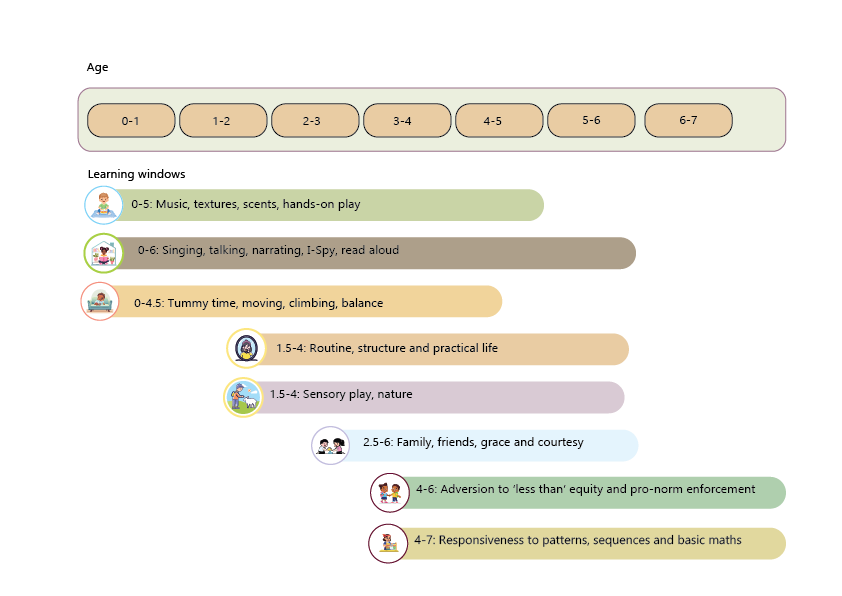
Windows of Opportunity
As parents, we often hear that children’s brains are like sponges. But from a developmental standpoint, it’s even more exciting than that. Young children grow along predictable pathways, guided by unique windows of opportunity. These are specific times when their brains are uniquely wired to build the foundations for future success.
During these windows, your child’s brain is actively shaping its core architecture. It is hyper-responsive to the environment around them, meaning they can absorb the fundamentals of logic, reasoning, and problem-solving more naturally and effortlessly now than at any other point in their lives.
We already instinctively know how important the environment is when we sing with our babies, play music, or take them to the park. Our materials are designed to tap into that same natural responsiveness, focusing on two crucial windows of development:
1. The Logic & Patterns Window
Children are natural pattern-finders. Our games use sequences and patterns to gently introduce the building blocks of logical thinking. Instead of memorizing rules, your child learns to apply logic to the real world through play, setting the stage for advanced critical thinking later in adolescence.
2. The Fairness & Data Window
Young children have a deep, innate focus on fairness (‘That's not fair!’). We utilize this specific window of emotional and social development to introduce the basic concepts of data science. By looking at fairness through a structured lens, children learn how to gather information and make balanced sense of the world around them.
But we also know that the other windows are important. You will find our computer science, logic and art lessons link into early years art, music movement and more.
How a lesson works
Present the lesson

Before you begin, take a quick look through your Coach Guide. It has all the instructions you need, including handy QR codes that link directly to short video guides for each lesson and our video welcome from the team.
Just print out your materials, cut out the pieces, and you’re ready to go!
The best time to introduce these activities is during your child’s ‘green light’ moments—when they are rested, curious, and naturally eager to engage. When the moment is right, just follow the video instructions to present the lesson and watch the magic happen.
Observe and repeat
Think of yourself as a gentle observer while your child plays. Each of our lessons includes simple cues on exactly what to look for, helping you ensure the activity is in that ‘sweet spot’—not too easy, but not too frustrating. If it’s not the right moment, move away from the activity and introduce it again another day.
We take inspiration from the Montessori approach, where children naturally thrive on repetition. In a Montessori classroom, activities are beautifully laid out on trays, inviting children to rediscover them on their own. Instead of nagging, we can simply leave the materials within easy reach, quietly encouraging them to return to the fun whenever inspiration strikes.
Practical Life
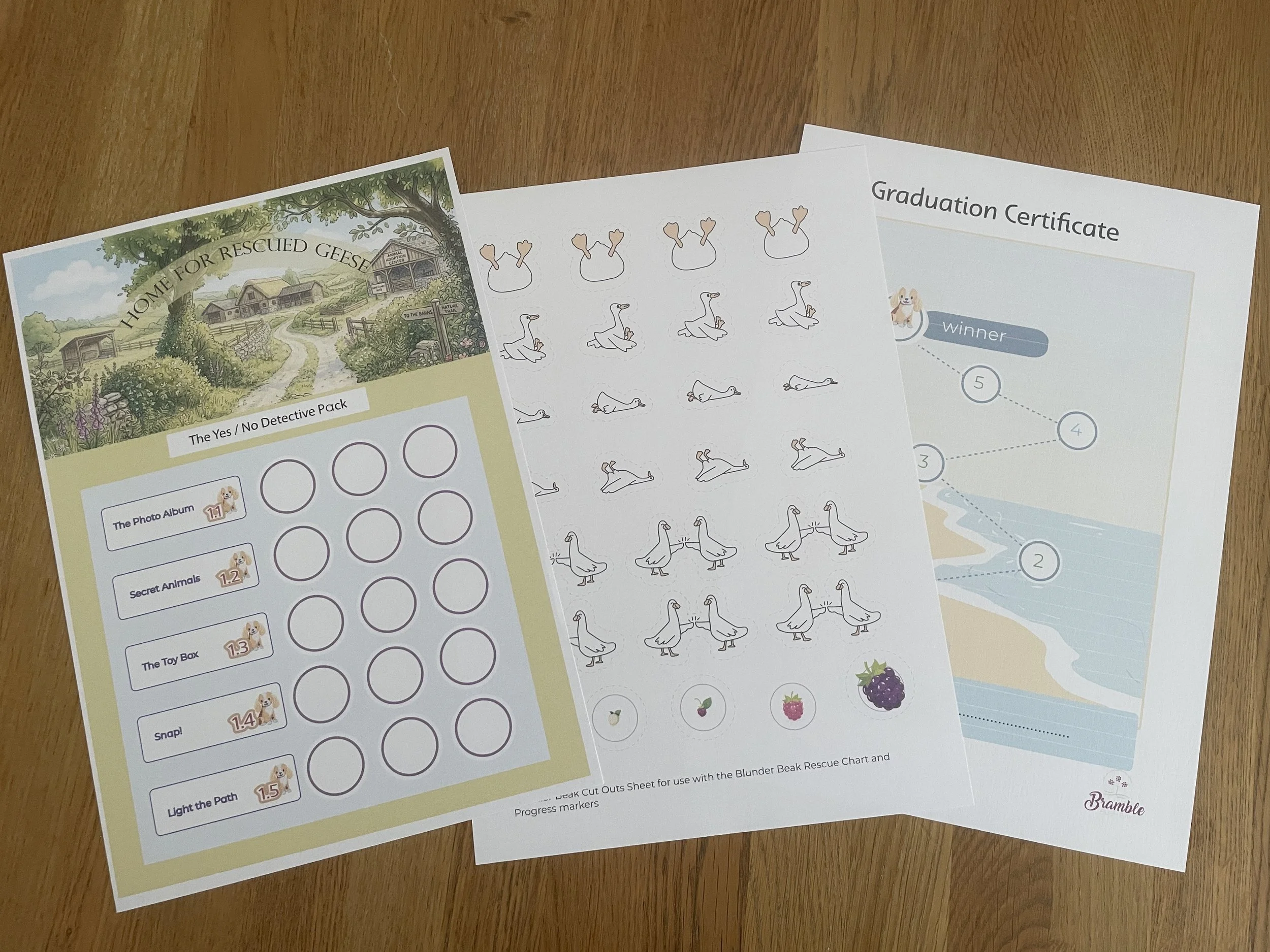
Now it's time to bring the learning to life! We’ve put together a list of fun, everyday ideas to help your child use their new logic skills to solve real-world problem, and we would love to hear your creative ideas, too.

When these concepts become second nature through daily life, your child will step effortlessly into more advanced lessons in the future.
And don’t forget Blunder Beak! he can help your little one learn an independent mindset, our most vital skill of all.
‘These materials prove that young children can pick up the foundations of computer science without putting them in front of screens.’
– JV, Tunbridge Wells
Get In Touch
If you have any questions, we’ll review your message and get back to you soon. We are small team, so please be patient.